Google AI Overviews in Malaysia: what changed, how to get cited
Google now answers many searches itself, in the AI box at the top, before anyone clicks. Here is what that does to your clicks, which searches it hits, how Google picks the sources it cites, and how a Malaysian SME becomes one of them.
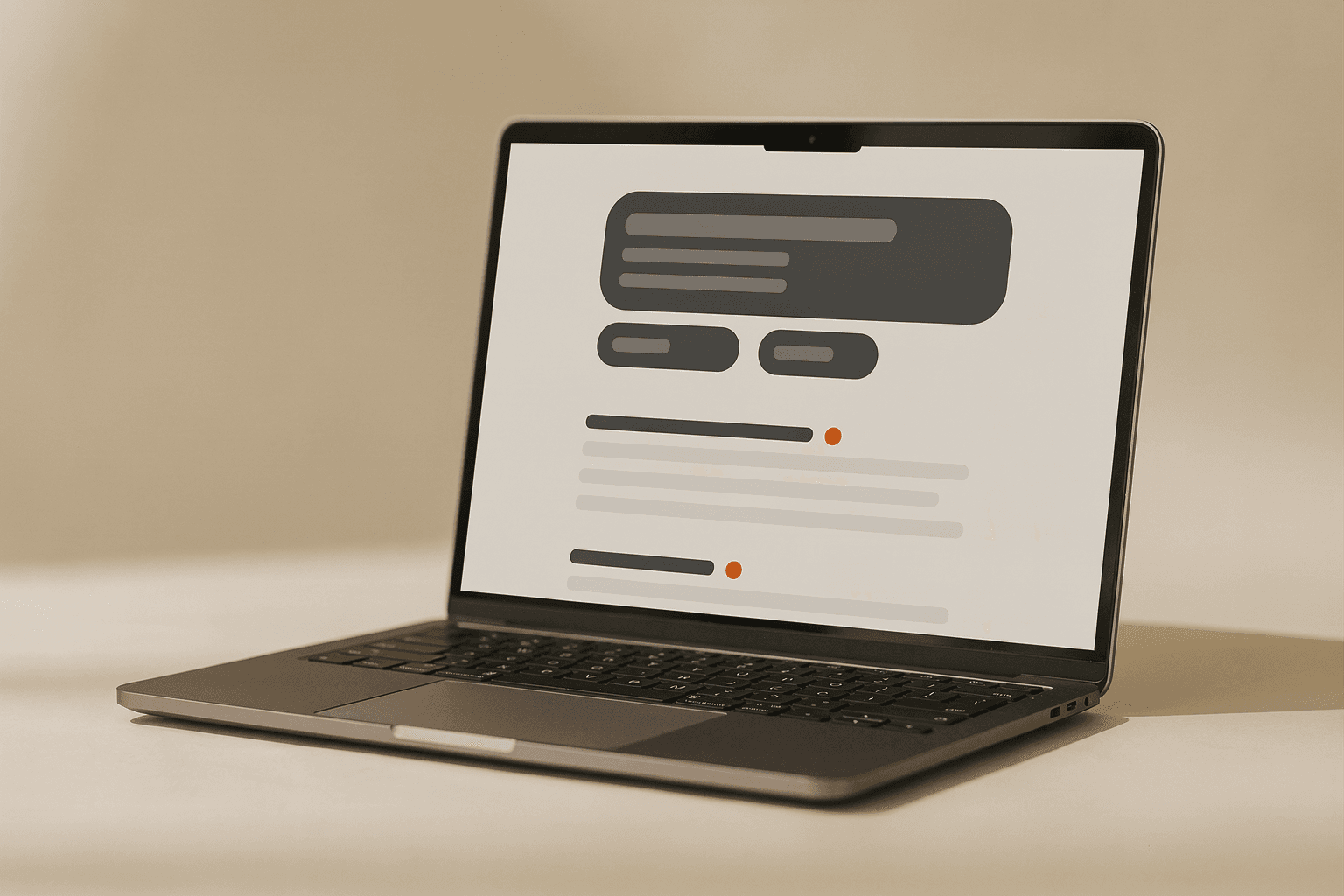
A Google AI Overview is the AI-written summary Google now places at the very top of many search results, above the blue links, stitched together from a few cited websites. It was rebranded from Search Generative Experience (SGE). It is live in Malaysia, and it changes how often anyone clicks through to a website at all.
Key takeaways
- Google AI Overviews are live in Malaysia. Google rolled them out to more than 200 countries and over 40 languages, including Malay, in May 2025 (Google, The Keyword).
- They are volatile. A Semrush study of 10 million keywords found AI Overviews showed on 6.5% of queries in January 2025, peaked at just under 25% in July, then settled below 16% by November.
- They take clicks. Pew Research found that when an AI summary appears, people click a normal result in only 8% of visits, versus 15% with no summary, and click a link inside the summary in just 1%.
- They hit informational "how / what / why" searches hardest. Transactional, local, and "near me" searches, plus your Google Business Profile, are far less exposed.
- You get cited by being the clearest, most specific answer: crawlable pages, real numbers, schema, and consistent details. The Princeton GEO study (KDD 2024) found statistics and citations measurably raise AI-answer visibility.
Are Google AI Overviews live in Malaysia?
Yes. Google expanded AI Overviews to more than 200 countries and over 40 languages, Malay included, in May 2025 (Google, The Keyword). So for a real share of Malaysian searches, the first thing your customer reads is no longer a list of websites. It is Google's own answer, with two to seven sources cited beneath it.
Google reported AI Overviews reaching roughly 2 billion monthly users by mid-2025, so this is a default surface now, not an experiment. The strategic question for an SME is simple: when Google writes that answer about your kind of business, is your website one of the sources it pulls from, or are you below the fold where almost nobody scrolls?
How much traffic do AI Overviews actually take?
Less than the scary headlines, but enough to matter. Google search has been mostly zero-click for years: the SparkToro and Datos 2024 study by Rand Fishkin found 58.5% of US Google searches already ended without a single click, with only 360 of every 1,000 reaching the open web. AI Overviews push that further where they appear.
One honest caveat before the numbers: the zero-click and click-through figures below (SparkToro, Pew, Ahrefs) are all US or global panel data. There is no published Malaysian equivalent yet, so treat the direction as what transfers here, not the exact percentage. The clearest behaviour measurement comes from Pew Research Center, which analysed 68,879 real Google searches from 900 US adults in March 2025.
"Users who encountered an AI summary clicked on a traditional search result link in 8% of all visits. Those who did not encounter an AI summary clicked on a search result nearly twice as often (15% of visits)." — Pew Research Center, Google users are less likely to click on links when an AI summary appears in the results (July 2025)
For the page that ranks number one, the hit is sharper. Ahrefs first measured a 34.5% drop in position-one click-through rate when an AI Overview was present (300,000 keywords, March 2024 versus March 2025). Its December 2025 update, comparing December 2023 with December 2025, found that drop had deepened to 58%. The top organic spot is worth far less than it used to be on the searches Google now answers itself.
Which searches are most and least affected?
AI Overviews are not spread evenly, the part most "SEO is dead" panic skips. They cluster on informational "how / what / why" questions, where Google can safely summarise a fact. They are far thinner on transactional, local, and branded searches, where the buyer wants to choose, book, or buy. The Semrush pullback below 16% reflects that retreat.
The table below is the practical version for a Malaysian SME.
| Searches AI Overviews hit hard | Searches they barely touch |
|---|---|
| "How does customs clearance work in Malaysia" | "Customs agent Port Klang" |
| "What is the difference between a tadika and a taska" | "Tadika near me" |
| "Why is my air-cond not cold" | "Aircon service Subang Jaya price" |
| "How much should a website cost" (broad, factual) | "[Your business name] reviews" |
| "Best way to whiten teeth" | "Book dental appointment Petaling Jaya" |
| General "how / what / why" research | Maps pack, "open now", and "near me" results |
The pattern: if a buyer is researching a concept, Google may answer it and keep the click. If a buyer is ready to act locally, they still land on a real business, and your Google Business Profile and Maps listing sit outside the AI Overview entirely. Most Malaysian SME revenue comes from the second column. That is why the headline panic overstates the threat for a local service business.
How does Google choose the sources it cites?
Google does not cite the prettiest site or the one that paid the most. There is no submission form and no paid slot inside the Overview. It cites the pages that most clearly answer the question, that it can read as text, and that other sources corroborate. You earn it by being the cleanest answer on the open web.
The deciding factor most in your control is the second one: is the exact answer on the page, stated plainly? A page that directly answers "how much does X cost" or "what is the difference between X and Y", in a sentence or a table, is far more quotable than one that says "contact us for details". The Princeton-led GEO study (Aggarwal et al., KDD 2024), tested across roughly 10,000 queries, found that adding statistics, quotations and cited sources to a page lifted its visibility in generative answers by up to 40%, with statistics alone contributing up to a 41% gain. The crawlability and consistent-details side of this (server-rendered HTML, schema, matching contact details) is the same foundation that wins the chat engines, which we cover in getting recommended by ChatGPT.
How does a Malaysian SME get cited inside an AI Overview?
You get cited by turning your website into the clearest published answer to your buyers' questions, on pages Google can read. Start by searching five questions a customer would ask, a mix of "how / what" and local "near me", and note which sites the Overview cites and whether you are one of them.
That audit tells you which pages to fix first. The two moves specific to winning the box, beyond the crawlable-and-schema foundation the siblings above cover:
- Put the exact answer on the page as text. Real prices as a range, real timelines, real specifics, typed as text, never inside an image. Google cannot read a JPEG price list, and "contact us for details" gives the summariser nothing to lift.
- Add an FAQ block of five to eight genuine buyer questions with direct 40 to 70 word answers. This is the single most "liftable" format for an AI summary, and "We clear 200 containers a month" beats "lots of experience" every time.
Then win the searches Overviews leave alone: complete your Google Business Profile, because that is what surfaces for the high-intent local "near me" queries that sit outside the AI box entirely. Our Google Business Profile checklist for Malaysia runs through every field.
Do AI Overviews mean SEO is dead?
No. One type of SEO traffic, broad informational clicks, is shrinking, while the discipline underneath it matters more than ever. Gartner projects traditional search volume will drop 25% by 2026 as AI answers absorb routine queries, but that is a shift in where the value sits, not the end of search. Google still drives most discovery for Malaysian local businesses.
The work changes shape rather than disappears. The old goal was to rank in the top ten and earn the click. The new goal is to be the source Google quotes, and the business it sends an "act now" buyer to. The technical foundation is identical: fast, crawlable, well-structured, honestly written pages. We unpack the wider engine landscape in GEO vs SEO for Malaysian SMEs. A thin, unreadable site was always invisible. AI Overviews just made the cost of one arrive faster.
Where Wiz Studio Labs fits in
There is no slot inside an AI Overview to buy, so the only honest play is to be the page Google reaches for when it writes the answer. Wiz Studio Labs builds and hosts Malaysian SME sites engineered for exactly that: server-rendered HTML, prices and timelines as text, FAQ blocks Google can lift, and schema baked in.
If your current site hides its answers in images, a slow JavaScript shell, or a "contact us" wall, that is the gap costing you the citation. See our templates or start a brief and we will build it the readable way. RM 399 a year, one edit included, and you pay only if you keep it.
Common questions
Frequently asked questions
- Are Google AI Overviews available in Malaysia?
- Yes. Google's May 2025 expansion of AI Overviews (the box formerly branded SGE) added Malay and reached well past 200 markets, per the company's official blog. With around 2 billion users worldwide by mid-2025, it is now a default Malaysian search surface rather than a test, so a customer often reads Google's own summary before any blue link.
- Do AI Overviews really reduce website traffic?
- On the searches they appear in, yes. Pew Research (July 2025, 900 US adults) found an AI summary roughly halved the rate at which people clicked a traditional result. Ahrefs put the position-one drop at 34.5%, deepening to 58% in its December 2025 update. All of this is US and global panel data, so read the direction as what transfers to Malaysia, not the precise figure.
- Which searches do Google AI Overviews affect most?
- Informational "how", "what" and "why" questions take the biggest hit, because a fact is safe to summarise. Action-oriented searches (transactional, branded and "near me", where someone is ready to book or buy) are far less exposed, and Maps plus your Google Business Profile stay outside the box. Since a local SME earns most of its revenue from that second group, the headline panic is overstated for them.
- How does Google decide which websites to cite in an AI Overview?
- Nobody buys their way in; there is no form and no ad slot. The win goes to whichever page answers the question most plainly in readable text and is backed up by other sources. The Princeton GEO study (KDD 2024) measured the levers: statistics, quotations and named citations lifted a page's visibility in AI answers by up to 40%, with statistics alone worth up to 41%.
- How can my Malaysian business get cited in a Google AI Overview?
- Put your real answers on the page as text, never inside an image: prices as a range, timelines, specifics. Add an FAQ block, use real numbers, ship schema.org data, and keep the site fast and crawlable (server-rendered HTML, not a JavaScript-only shell). Complete your Google Business Profile to win the high-intent local searches Overviews leave alone.
- How much does an AI-ready business website cost in Malaysia?
- An AI-readable site does not need to cost thousands of ringgit. The essentials are crawlable text answers, schema, an FAQ block, and a fast page. Wiz Studio Labs builds and hosts a complete Malaysian SME website for RM 399 a year, one edit included, and you pay only if you keep it.
About the author

Dan Duar
Founder, Wiz Studio Labs · Director, DNE Forwarding
Writes The Wiz Journal on websites, SEO, and digital growth for Malaysian SME owners. Previously a senior data analyst at Grab and a tech consultant at EY. BNI Integrity Shah Alam member.
Like what you read
Get a Wiz site for RM 399/year.
We build it free in 2-3 days. You see it live before you spend a ringgit. Keep it if it works for your business.
No card · No sales call