What a high-converting website for a Malaysian interior designer or renovation contractor looks like
Portfolio-driven design without falling into the gallery-grid trap. The structure that turns scrollers into 5-figure renovation enquiries.
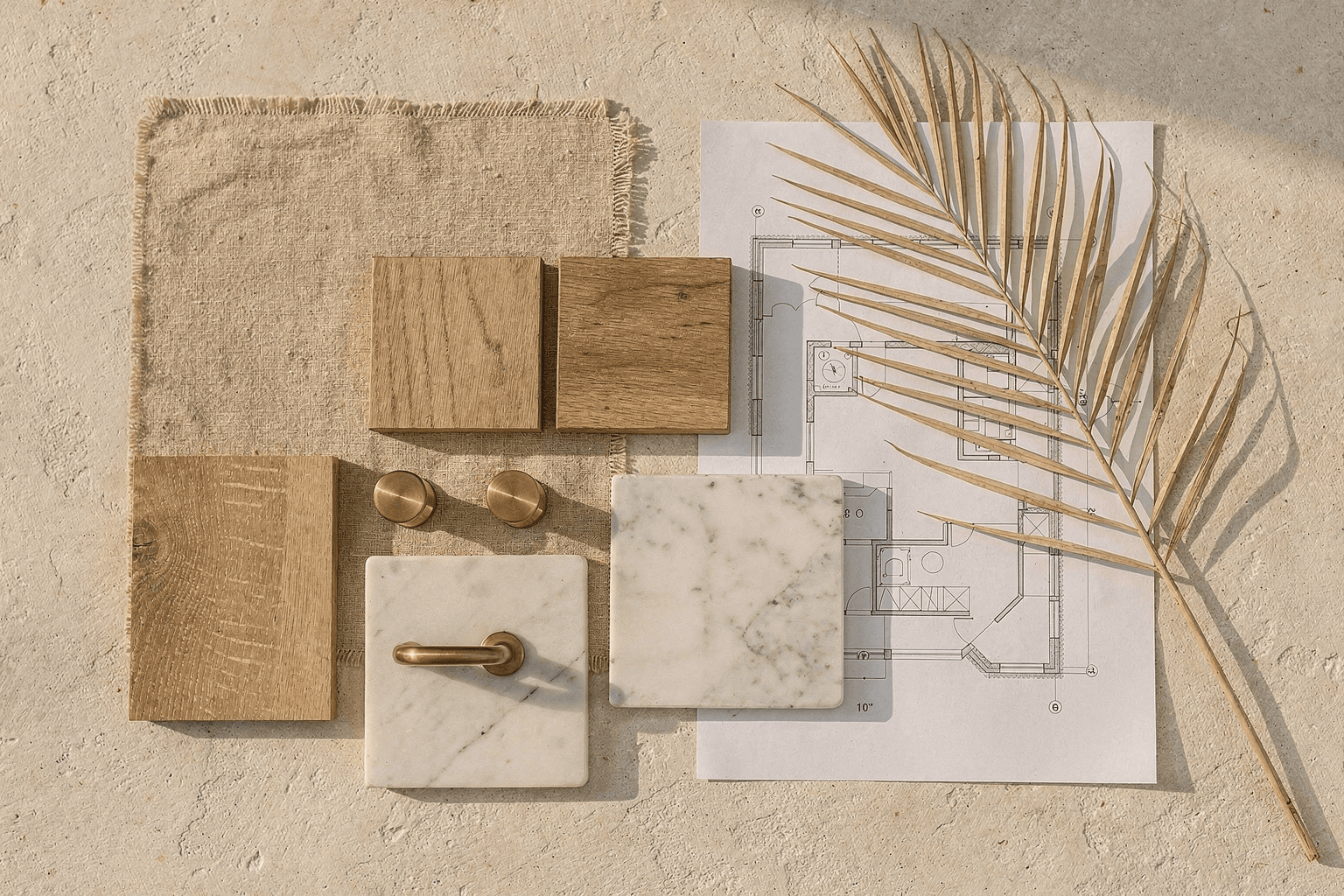
Interior design and renovation is one of the highest-value service categories in Malaysia by ticket size — RM 40,000 - RM 800,000 for a residential renovation, RM 80,000 - RM 5M for commercial. And it is one of the most visually-driven buying decisions in the SME services market.
Yet the average Malaysian interior designer website is a 9-tile portfolio grid with no context, no story, no pricing signal, and a "Contact Us" button that links to an underused email address.
This article is the structural breakdown of what a high-converting interior designer site actually looks like.
What renovation buyers are doing on your website
Three buyer modes:
1. The browser — has not committed to renovating yet, is "saving inspiration." Will visit 8-15 designer sites over weeks. 60% of traffic, 15% of revenue.
2. The shortlist visitor — is actively comparing 3-5 designers to call. Has a project in mind, a rough budget, and a timeline. 25% of traffic, 60% of revenue.
3. The referral verifier — has been recommended your firm by someone and is checking that you exist and look legitimate. 15% of traffic, 25% of revenue.
A well-designed renovation website serves all three with different sections of the same site:
- The browser scrolls the portfolio.
- The shortlist visitor reads the process and project pages.
- The referral verifier checks the credentials and contact details.
Above the fold — the hardest decision
Interior design is one category where the visual above-the-fold matters more than the copy. The hero needs to be:
- A genuinely beautiful photo of your own work — not stock, not Pinterest-tier, not Pinterest-aspirational.
- Sized correctly for mobile (75% of traffic). The hero image needs to look great cropped to a phone screen.
- Loaded fast. A 4 MB JPEG hero kills mobile performance.
Underneath the photo, the copy should be short:
Studio Verde — Interior design for KL homes and small commercial spaces
Renovations from RM 80,000. End-to-end, lead-architect on every project, 6-month average timeline.
[See our work] [WhatsApp]
Notice the price floor. Renovation buyers absolutely want to know whether you are RM 80k territory or RM 800k territory before they call. Stating it up front does two things:
- Saves you 50% of unqualified enquiries.
- Builds trust with the qualified ones.
The fear that "publishing prices will scare them off" is empirically backwards. The unqualified ones are scared off (good). The qualified ones engage at higher rates because they have already accepted the range.
Portfolio — the structural trap
Most Malaysian interior designer sites have a single portfolio page: 9 to 30 thumbnails in a grid, each opening a lightbox of more photos. This is a trap for three reasons:
- No context. A thumbnail of a kitchen tells the visitor nothing about the project size, the timeline, the budget, the brief, or what the renovation actually solved.
- No SEO value. Thumbnail pages do not rank for anything. "Modern kitchen renovation Petaling Jaya" is searched 200+ times monthly; if your portfolio is a grid with no text, you do not appear.
- No conversion path. A visitor sees a beautiful photo, has no way to "ask about a similar project," scrolls back.
The pattern that works:
Each major project gets its own page (3-5 paragraphs minimum):
/projects/3-bedroom-condo-bukit-jalil/projects/townhouse-renovation-sri-hartamas/projects/cafe-fit-out-pj
Each project page covers:
- Hero image — best photo of the project.
- The brief — what the client wanted (1-2 paragraphs).
- The constraint — what made this project interesting (budget? timeline? unusual space?).
- The work — what was done (1-2 paragraphs).
- The numbers — total project value (range OK), timeline, key contractors involved.
- Photo gallery — 6-12 photos with brief captions.
- The outcome — quote from the client where consent permits.
- CTA — "Have a similar project in mind? WhatsApp us with the rough scope."
Eight to twelve such pages will outperform a 30-thumbnail grid in search traffic, time-on-site, and enquiry conversion by a factor of three to five.
The process page — second-highest impact
Renovation buyers are nervous about hiring a designer. The horror stories are real — projects that double in cost, deadlines that slip 9 months, contractors that disappear with deposits.
A clear process page mitigates this. The structure that works:
Phase 1: Discovery (Week 1-2)
- Initial consultation (free or RM 500 deductible from final fee)
- Site visit and measurements
- Brief refinement, budget discussion
Phase 2: Concept (Week 3-6)
- 2-3 design directions presented
- Material and finish selections
- Revised cost estimate
Phase 3: Detailed design (Week 7-10)
- Final drawings and 3D renders
- Detailed Bill of Quantities (BoQ)
- Final fixed quote
Phase 4: Construction (Week 11-26)
- Contractor mobilisation
- Weekly site walks with you
- Progress updates with photos
Phase 5: Handover (Week 27-28)
- Defects walk-through
- Snag list and rectification
- Project sign-off and 12-month defects warranty
State this process in plain language with photos of each stage where you have them. Most Malaysian designer websites do not have a process page. Adding one is one of the highest-ROI single additions.
Credentials and trust
Renovation is a high-trust purchase. The trust signals that matter:
- CIDB registration for the contractor partner (if you sub-contract construction). Display the CIDB grade prominently.
- PAM / MIID / LAM membership for the principal designer.
- Real photos of the designer and team. Not a stock photo. Not just a logo.
- Years in practice + completed project count. "47 completed residential projects since 2019" beats "many years of experience."
- Testimonials with full names, project type, and where the client lives ("Sarah and Marcus, three-bedroom condo, Mont Kiara").
- Press / media coverage — Tatler Homes, The Edge Property, lifestyle features in Malaysian magazines. List them.
What is overrated: international award badges nobody recognises (most "designer of the year" awards are pay-to-play and visitors increasingly distrust them).
Mobile-specific considerations
Interior design is heavy on imagery, and Malaysian buyers are heavily mobile. The mobile portfolio experience needs:
- Image sizes optimised for mobile (use
next/imageor equivalent — serve smaller files to smaller screens). - Vertical-format photos that work on a phone (a horizontal kitchen panorama crops badly to a 9:16 phone screen).
- Swipe-able galleries that feel native, not pinch-zoom modals.
- "Open in Instagram" links on project pages — many buyers want to see your IG feed for raw, less-curated content.
Schema specific to interior design
Beyond standard LocalBusiness schema:
HomeAndConstructionBusinesstypeServiceschemas for each major offering (residential renovation, commercial fit-out, kitchen design, etc.) withpriceRangeCreativeWorkschema for each project — withname,description,image,creator(you)Reviewschema for testimonialsPersonschema for the principal designer
Conversion CTAs for interior design specifically
Interior design buyers will not fill out long forms. They also will not just "tap WhatsApp" without context — the next step needs to feel substantive.
The CTA pattern that works:
- Primary (mobile sticky): "WhatsApp — tell us about your project"
- Secondary (in-page): "Book a 30-min discovery call" (Calendly)
- Tertiary (project pages): "Have a similar project? WhatsApp us"
For the discovery call, give it a name and a defined output: "30 minutes — we'll talk through your space, your budget range, your style preferences, and you'll leave with a sense of whether we're a fit." Buyers respond well to defined value upfront.
Where Wiz Studio Labs fits
Every interior designer / renovation contractor site we build at Wiz uses the Apex template family — the Apple-grade visual language that lets the portfolio photography do the talking without competing with it. We bake in the structure above by default: individual project pages with context, a clear process page, schema for HomeAndConstructionBusiness + CreativeWork, mobile-optimised galleries, and a tiered CTA hierarchy.
If your current portfolio site is a 30-thumbnail grid that delivers one enquiry a month, the rebuild is one of the highest-leverage marketing moves available in this category. See the Apex template or start a brief — RM 399 / year, two-day turnaround, interior-design-specific structure built in.
About the author

Dan Duar
Founder, Wiz Studio Labs · Director, DNE Forwarding
Writes The Wiz Journal on websites, SEO, and digital growth for Malaysian SME owners. Previously a senior data analyst at Grab and a tech consultant at EY. BNI Integrity Shah Alam member.
Like what you read
Get a Wiz site for RM 399/year.
We build it free in 2-3 days. You see it live before you spend a ringgit. Keep it if it works for your business.
No card · No sales call