Kindergarten & childcare website Malaysia: fill your enrolment
A tadika or childcare website fills seats when it shows registration, fees, and one-tap WhatsApp, and turns a "tadika near me" search into a booked visit.
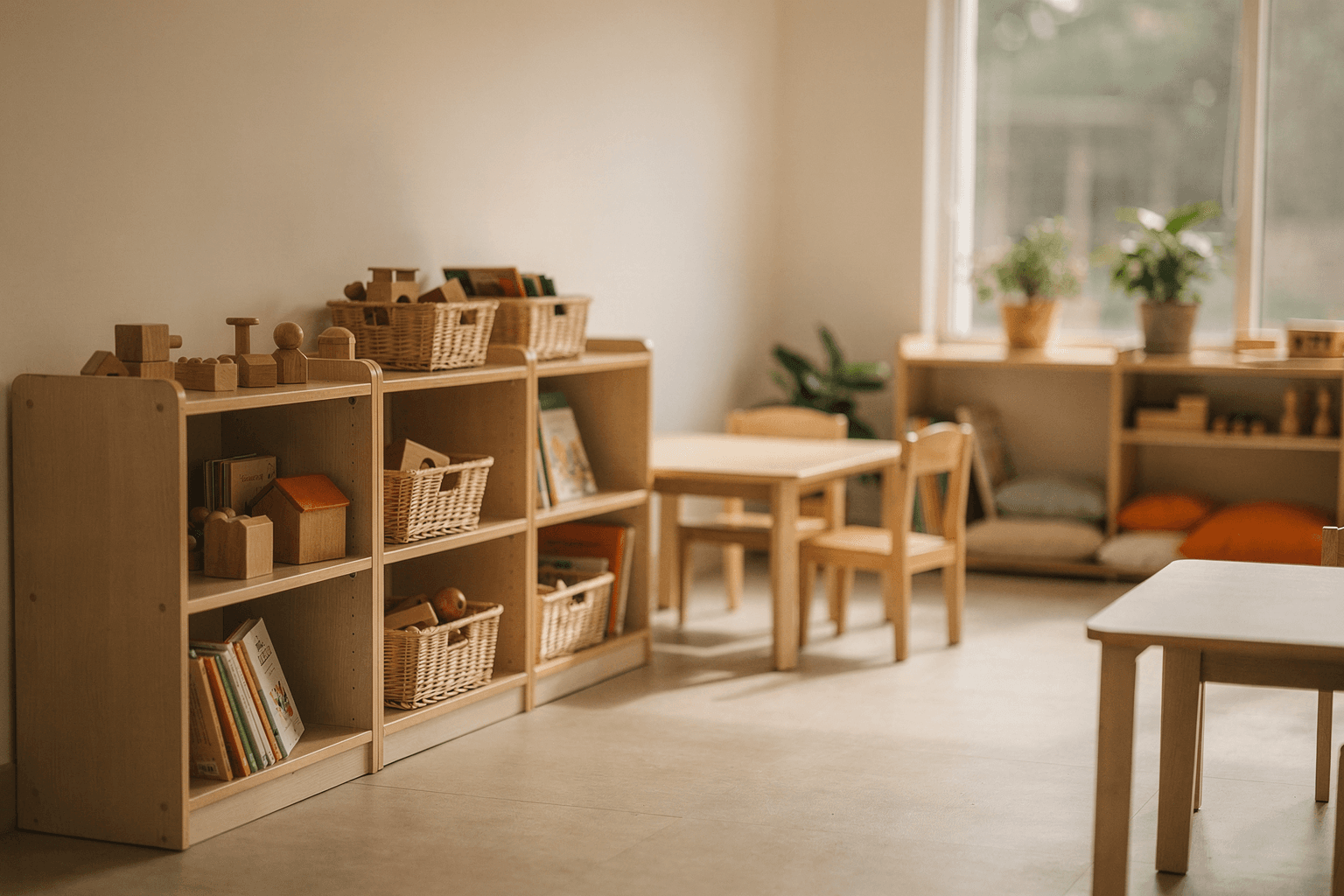
A kindergarten or childcare website in Malaysia fills enrolment when it answers a parent's three quiet questions in the first scroll: is this place registered and safe, what does it cost, and how do I reach you now. Show your JKM or MOE registration, a fee range, and a one-tap WhatsApp enquiry, all in readable text that a phone and an AI engine can both pick up.
Most tadika and taska in Malaysia are found by word of mouth first, then checked online second. A parent hears your name in a WhatsApp group, then looks you up before they ever message you. With 35.4 million internet users in Malaysia at 98.0 percent penetration as of October 2025 (DataReportal, Digital 2026), that second step is almost guaranteed. If your website cannot pass that quiet background check, the referral you already earned goes cold.
Key takeaways
- A taska (childcare, age four and below) must register with the Department of Social Welfare (JKM) under the Child Care Centre Act 1984. A tadika (kindergarten, ages four to six) must register with the Ministry of Education under the Education Act 1996. Showing this on your site is the strongest trust signal you have.
- A parent on a phone is deciding in seconds. Put your programmes, age groups, and a fee range in real on-page text, not inside a poster image, so both the parent and search engines can read them.
- One tap to WhatsApp, an embedded Google map, and a verified Google Business Profile turn a "tadika near me" search into a booked visit. Backlinko found 42 percent of local searchers click a result inside the Google Map Pack.
- AI engines like ChatGPT now answer "best kindergarten in my area" questions. They cite pages with specific, structured facts, so a vague site is invisible to them.
- The 2027 entry-age change is sending parents to research early. From 2027 children may start preschool at five, a change Prime Minister Anwar Ibrahim announced on 20 January 2026. The centres that are easy to find and verify will win that wave.
If you would rather see this built than read about it, Wiz Studio Labs makes your centre's site for RM 399 a year and you pay only if you keep it. Start with a template. The rest of this guide is what goes on the page.
What should a kindergarten or childcare website include?
A kindergarten or childcare website should make six things obvious in the first scroll: your JKM or MOE registration, your programmes and age groups, your fees as a range, your caregiver-to-child ratios and teachers' qualifications, your location with a map, and a one-tap way to enquire. Answer those and the parent stops checking and starts messaging.
Parents are cautious for good reason, because safety and legitimacy matter more in early childhood than in any other education sector. Discovery now starts in WhatsApp groups and on social platforms used by 30.7 million Malaysians, 85.0 percent of the population (DataReportal, Digital 2026), but the decision is made on your website minutes later. Publish your teachers' early-childhood qualifications plainly, describe a typical daily routine, and invite an open day or trial visit, so the questions a careful parent would otherwise ask are answered before they arrive. Add a few parent reviews or Google ratings as on-page text rather than only a star widget, and real photos of your actual premises, the classrooms, the outdoor play area, and the drop-off point, because both reassure a cautious parent and give search engines something to read. A site that opens with a slideshow but never states whether the centre is JKM or MOE registered forces the parent to assume the worst, or to message a competitor who made it obvious.
Should your website show your JKM or MOE registration?
Yes, and prominently. Registration is the single most reassuring fact a Malaysian parent can see, and it is also the one most centre websites forget to display. The body you register with depends on the age you serve: a taska for children four and below registers with the Department of Social Welfare (JKM) under the Child Care Centre Act 1984, while a tadika for ages four to six registers with the Ministry of Education under the Education Act 1996. Operating a kindergarten without an MOE licence is illegal.
State your registration type and number, and tell parents they can verify it themselves. Tadika registration can be checked through the Ministry of Education's MySPP system. If you run a taska, the safety rules you already follow are also strong selling points worth publishing. Caregiver-to-child ratios are set by regulation, and showing that you meet them builds immediate confidence.
| Child age | Required caregiver-to-child ratio |
|---|---|
| Newborn to 1 year | 1 caregiver to 3 children |
| 1 to 3 years | 1 caregiver to 5 children |
| 3 to 4 years | 1 caregiver to 10 children |
Source: caregiver ratios are set under the Child Care Centre Act 1984 and its regulations (JKM), here summarised for operators by MISHU. A taska certificate is valid for five years and must be renewed three months before it expires, and every caregiver must be a Malaysian citizen aged at least 18 who passes the PERMATA KAP course, 144 hours of theory plus 40 hours of practical training, within their first year. These are facts no glossy stock photo can match, and putting them on the page tells a careful parent you have nothing to hide.
Should a kindergarten website list its fees as text or an image?
A service menu or fee list saved as an image or PDF is invisible to search. Google and AI engines read a JPEG price list as a single picture, so a parent searching "tadika fees Shah Alam" will never land on it. Typed-out programmes, age groups, durations, and a fee range let that exact search find you, and let an AI engine quote your figures in its answer.
You do not have to publish a single fixed price. A range works better, because it qualifies the enquiry before it reaches you and filters out parents who were never going to fit your budget. List each programme as plain text: the age group it serves, the hours, what is included such as meals and transport, and the fee band. The same applies to your curriculum. If you follow the KSPK National Preschool Standard Curriculum, say so in words on the page, alongside any approach you use such as Montessori or play-based learning. For the structure that wins enquiries in a related sector, see our guide on what a Malaysian tuition centre website needs.
How do parents find a kindergarten or childcare website online?
Most start with a local search like "kindergarten near me" or "tadika [area name]". When a parent in Bangi types "tadika Bangi" on her phone, the centres that surface are the ones with a complete, verified Google Business Profile. Backlinko's local-search research found 42 percent of local searchers click a result inside the Google Map Pack, and Think with Google reported 76 percent of nearby smartphone searches lead to a visit within a day. That is enrolment intent you cannot afford to miss.
Three moves capture it:
- Claim and verify your Google Business Profile, with your exact address, your specific category, real photos, and opening hours that match your website.
- Embed a Google map on your contact page so a parent can see the commute from home.
- Make the enquiry one tap, with a WhatsApp link and a pre-filled message, because that is how Malaysian parents prefer to make first contact.
A speed-tuned, mobile-first page matters here too, because a slow site loses the visitor before it loads, as we cover in website speed and Core Web Vitals.
Will your kindergarten show up in ChatGPT and AI search?
Increasingly, parents ask ChatGPT, Gemini, or Perplexity for a shortlist before they search Google, and these engines name the businesses whose pages carry specific, structured facts. A site that lists your registration, ratios, curriculum, fee range, and location in clean text gives an AI engine something to cite. A site of slogans and images gives it nothing.
The research is clear on what earns a citation.
"Adding statistics, quoting authoritative sources, and citing references produced the strongest visibility improvements in generative-engine responses."
Aggarwal et al., "GEO: Generative Engine Optimization" (KDD 2024)
In practice that means writing your facts as text, marking up your pages with schema.org data so engines understand your business type and FAQ, and keeping your content current. This matters more now because the 2027 entry-age change has parents researching earlier than ever. From 2027, children in Malaysia may start preschool at age five and Year One at age six, a change announced by Prime Minister Anwar Ibrahim in January 2026, with the choice left to parents. Centres that are easy to find and verify online will catch that wave of early researchers. For the plain-language version of how this works, read how to get recommended by ChatGPT.
What does a kindergarten or childcare website not need?
You can skip most of what agencies upsell. A kindergarten or childcare site does not need a custom booking app, autoplay video, a photo gallery of fifty stock images, or a long founder essay. These slow the page, and speed is not optional: Google's Core Web Vitals guidance sets a good loading target of 2.5 seconds or less for the main content, measured at the 75th percentile of visits (Google, web.dev). A heavy gallery blows past that on a phone, and a parent gone before the page loads never sees your registration number.
The trap to avoid is a beautiful site that hides the practical answers. Spend the effort on real photos of your actual premises, clear text, and a fast load on a phone. A parent does not need to be wowed. They need to confirm you are safe, registered, affordable, and close, then tap to message you. Everything that serves those four jobs earns its place. Everything else is decoration.
How much does a kindergarten website cost in Malaysia?
A kindergarten or childcare website does not need to cost thousands of ringgit upfront. Malaysian web-design quotes in 2025 ran from about RM 2,000 to RM 40,000 or more, with a basic small-business site around RM 2,500 to RM 5,500 before any annual upkeep (Media Plus Digital, 2025 cost guide). The job is simpler than that: a fast, mobile-first page that states your registration, programmes, fees, and location in readable text, with one-tap WhatsApp enquiry and a verified Google Business Profile. Wiz Studio Labs builds and hosts a complete Malaysian SME website for RM 399 a year, one edit included, and you pay only if you keep it. You can see your own pages built before you commit. Start with a template or tell us about your centre.
Sources
- DataReportal, Digital 2026: Malaysia for internet and social media usage.
- Malaysia.gov.my, Childcare Centre (TASKA) for JKM registration under the Child Care Centre Act 1984.
- MISHU, opening a child care centre (Taska) for five-year validity, caregiver ratios, and the PERMATA KAP course.
- HiParents, registering a tadika with the MOE for the Education Act 1996 and the KSPK curriculum.
- HiParents, opening a kindergarten in Malaysia for MySPP registration verification.
- Malay Mail, preschool entry lowered to five from 2027.
- Backlinko, local SEO statistics for the 42 percent Map Pack click rate.
- Think with Google, near-me searches for the 76 percent visit-within-a-day figure.
- Google web.dev, Largest Contentful Paint for the Core Web Vitals 2.5-second target.
- Aggarwal et al., GEO: Generative Engine Optimization (KDD 2024).
- Media Plus Digital, website development cost in Malaysia (2025).
Published 17 June 2026. Last reviewed 17 June 2026.
Common questions
Frequently asked questions
- Does a kindergarten or childcare centre in Malaysia need a website?
- In practice, yes. Most Malaysian parents hear your name through word of mouth, then look you up before they message. With 35.4 million internet users at 98.0 percent penetration (DataReportal, October 2025), a centre with no website, or one missing its fees and registration, fails that background check and loses a referral it had already earned.
- What is the difference between a tadika and a taska in Malaysia?
- A taska is a childcare centre for children aged four and below, registered with the Department of Social Welfare (JKM) under the Child Care Centre Act 1984. A tadika is a kindergarten for ages four to six, registered with the Ministry of Education under the Education Act 1996. Many centres run both, under both registrations.
- Should I show my JKM or MOE registration on my centre's website?
- Yes, prominently. Registration is the strongest trust signal a Malaysian parent looks for, and most centre sites leave it off. State your registration type and number, and note that tadika registration can be verified through the Ministry of Education's MySPP system. Operating a kindergarten without an MOE licence is illegal, so showing yours sets you apart.
- Should a kindergarten website list its fees?
- It is strongly recommended, as a range rather than a fixed price. Publishing a fee band qualifies enquiries before they reach you and filters out parents outside your budget. Crucially, type the figures as text, not inside a poster image, because Google and AI engines cannot read a JPEG price list, so an image menu is invisible to search.
- How do parents find a kindergarten online in Malaysia?
- They search locally for "tadika near me" or "kindergarten [area]" and choose from the Google map results, so a verified Google Business Profile and a one-tap WhatsApp link are what convert that search. Local intent runs high: Think with Google reported 76 percent of nearby smartphone searches end in a visit within a day.
- How much does a kindergarten website cost in Malaysia?
- A childcare website does not need to cost thousands of ringgit upfront. The essentials are a fast mobile page stating your registration, programmes, fees, and location in readable text, with one-tap WhatsApp enquiry. Wiz Studio Labs builds and hosts a complete Malaysian SME website for RM 399 a year, one edit included, and you pay only if you keep it.
About the author

Dan Duar
Founder, Wiz Studio Labs · Director, DNE Forwarding
Writes The Wiz Journal on websites, SEO, and digital growth for Malaysian SME owners. Previously a senior data analyst at Grab and a tech consultant at EY. BNI Integrity Shah Alam member.
Like what you read
Get a Wiz site for RM 399/year.
We build it free in 2-3 days. You see it live before you spend a ringgit. Keep it if it works for your business.
No card · No sales call