Why most Malaysian property agent websites fail, and the page structure that books viewings
Most Malaysian real estate negotiator websites are just a logo and a phone number. Here is the page structure that captures leads, builds trust, and books property viewings, built for REN and small agencies.
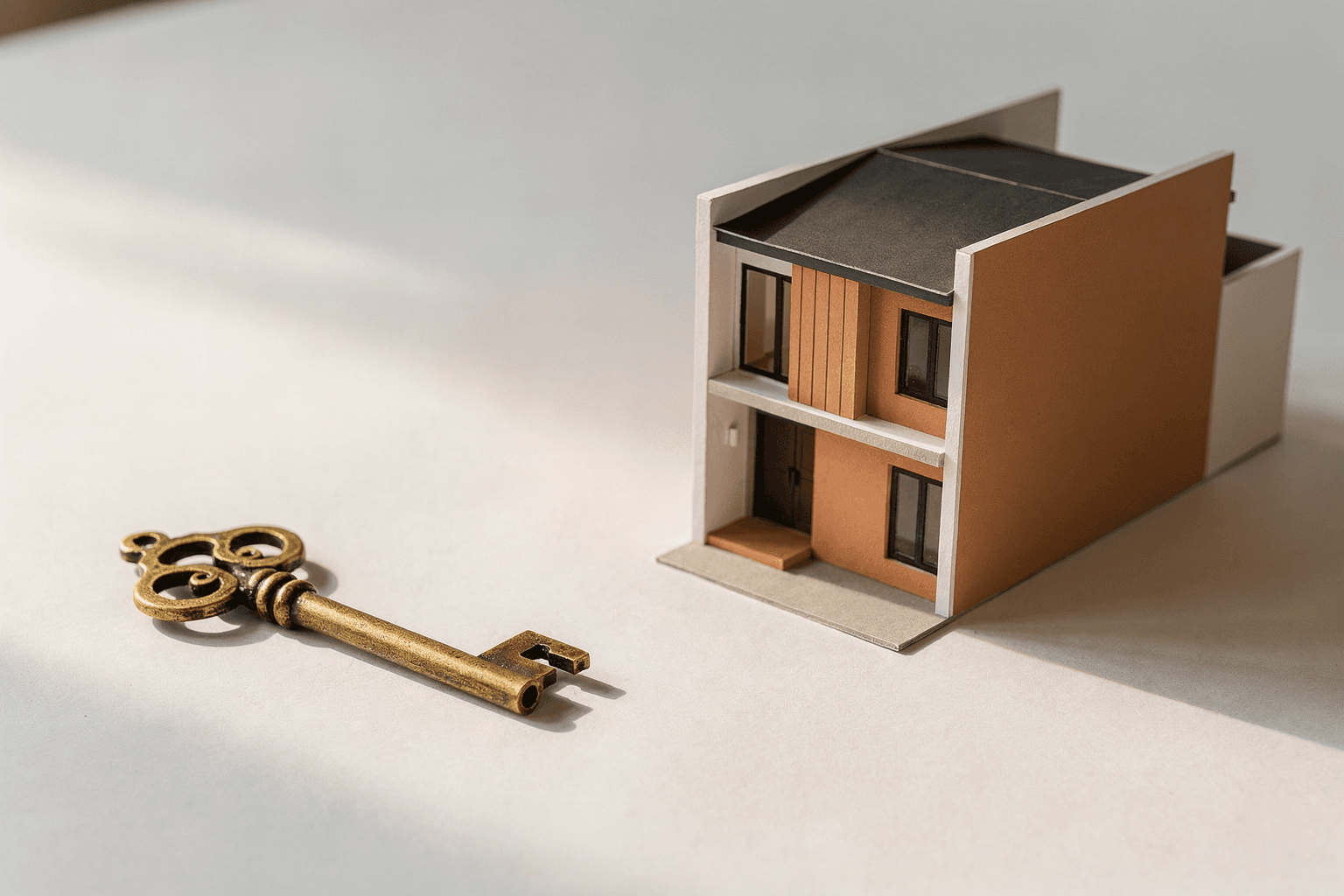
Most Malaysian real estate negotiator (REN) websites fail because they are digital business cards with no structure for capturing leads, building trust, or moving a stranger toward a viewing appointment. The pages that do work follow a consistent pattern: clear area specialisation, visible REN tag credentials, featured listings with real data, and a frictionless WhatsApp path to the first conversation.
Above: a modern Malaysian property listing environment. To most buyers doing their due diligence online, your website is the agent, so it has to build trust within seconds.
Written by Dan Duar, Wiz Studio Labs. Last reviewed: 11 June 2026.
Do property agents in Malaysia need a website when PropertyGuru already exists?
Yes, and the reason is control. PropertyGuru and iProperty are discovery platforms where buyers compare you against dozens of competing agents simultaneously. A personal website is the page where a buyer lands after they have noticed you and wants to decide if you are worth trusting. With Malaysia's internet penetration at 98.0% (DataReportal Digital 2026: Malaysia), the property search journey overwhelmingly starts online before a buyer calls anyone.
PropertyGuru and iProperty are excellent at putting you in front of buyers who do not know you yet. They are poor at helping you close those buyers once they do know your name. That search does not send them back to PropertyGuru. It sends them to wherever your name lives on the open web.
A well-built personal site also sidesteps the platform's biggest problem: your listing is always one click from a competitor's listing. On your own domain, there is no sidebar.
What do BOVAEP and the REN tag mean for your website?
Every Malaysian real estate negotiator (REN) must register with LPEPH (Lembaga Penilai, Pentaksir, Ejen Harta Tanah dan Pengurus Harta), known in English as BOVAEP (Board of Valuers, Appraisers, Estate Agents and Property Managers), and display their assigned REN tag number on all marketing materials including their website. This is both a legal requirement and a trust signal: buyers actively look for the REN number before calling, and a site without one reads as unregistered regardless of your actual status.
Display it prominently in your header, your footer, and on your About page. If you operate under a registered real estate agency (REA), the agency's BOVAEP registration number (E-series) should appear alongside your REN tag. LPEPH's public directory at lpeph.gov.my/search-listing lets buyers verify both credentials in seconds.
What page structure actually turns visitors into viewing appointments?
Seven components, in this specific order: area declaration, credentials, listings, area guides, testimonials, mortgage context, and a single WhatsApp CTA. The sequence mirrors how a buyer decides to trust you: first confirming you serve their area, then verifying you are legitimate, then browsing what you have. A site that skips the first two and leads with listings loses most visitors before they read anything.
- Immediate area declaration. State your specialisation in the first line: township, district, or property type. "Shah Alam SS15 to SS17 specialist" or "Petaling Jaya landed and semi-D, 10 years." Buyers short-list fast.
- REN credentials in the header. Name, REN tag, agency logo, and a WhatsApp button. This is the trust kit every visitor needs before they read anything else.
- Featured listings with real data. Price, size, bedroom/bathroom count, tenure (freehold/leasehold), and one strong photo per listing. Vague listings ("beautiful home, call for price") drive no action.
- Area/township guide pages. Each serves a dual purpose: SEO for "[township] property for sale" and genuine buyer education about the neighbourhood, school catchments, LRT access, and typical price bands.
- Testimonials with specifics. "Sold my SS14 house within 3 weeks at asking price" beats "great agent, very professional." Named reviewers with transaction context are far more credible than anonymous five-star scores.
- Mortgage context or loan eligibility guide. Malaysian household debt stood at 84.8% of GDP with a median Debt Service Ratio of 41% on newly approved loans, according to Bank Negara Malaysia's Financial Stability Review: First Half 2025 (most recently available edition at time of writing). Buyers have financing anxiety. A simple guide to DSR calculations or a link to a mortgage calculator pre-qualifies intent and removes a friction point.
- One clear WhatsApp CTA throughout. Not a contact form. Not an email address. A WhatsApp link with a pre-filled message naming the property or the area of interest.
If you are a registered REN and your current web presence is a PropertyGuru profile and a phone number, a dedicated site built on this structure is one of the most direct investments available. Start a brief at Wiz Studio Labs: RM 399/year, live within two working days, one substantive edit included. Pay only if you keep it.
What belongs on a featured listing page?
Each listing on your personal site should be a standalone page (or a detailed card), not just an image and a phone number. The structure below generates enquiries because it answers the questions buyers have before they will commit to a viewing: commute, price comparison, carrying costs, and what to expect on site.
| Element | Why it matters |
|---|---|
| Full address + map embed | Buyers want to see the commute before they call |
| Price per sq ft (not just total price) | Allows fair comparison with alternatives |
| Tenure and title type | Freehold, leasehold, strata, or individual |
| Maintenance fee (if strata) | Frequent omission that causes friction at viewing |
| Proximity to key amenities | Schools, hospitals, MRT/LRT, highway access |
| WhatsApp CTA with pre-filled property name | "Hi, I'm interested in [property name] at [address]" |
Listing pages should also carry the agent's REN tag on every page, not just the homepage.
How should a Malaysian REN write their About page?
Open with your area and your transaction count, not your biography. The About page is a proof-of-specialisation page: the buyer who lands here is a serious candidate evaluating whether to call you or the next agent on their shortlist. A specific transaction record wins that decision; a generic "passionate and dedicated" bio loses it. Five elements make the difference.
- Open with your area and your number. "I have transacted 60+ properties in PJ Section 14 to 17 since 2016." That is your headline claim.
- Your REN number and agency affiliation, linked to the LPEPH directory.
- Transaction history with specifics. Not a count of vague "happy clients" but a list of notable transactions: "[Township], 2-storey semi-D, sold in 18 days, 2024." Specificity is the difference between a claim and a credential.
- Languages spoken. Property transactions in Malaysia routinely involve Mandarin, Bahasa Malaysia, and English negotiations. Make it explicit.
- A real photo. Not a glamour shot. A professional headshot in context (at a property, in the office) that reads as genuine.
Do area and township pages actually work for property agents?
Yes, and they are one of the most underutilised page types in Malaysian real estate marketing. An area guide page for a specific township (for example, "Buying property in Alam Damai, Cheras") ranks for location-specific queries, demonstrates genuine market knowledge, and serves buyers who are weighing neighbourhoods before they have shortlisted a specific unit.
Each area page should cover:
- Typical property types and price bands, referenced against NAPIC/JPPH transaction data
- Schools (primary, secondary, international) within 3km
- Public transport access (LRT, MRT, BRT, Rapid bus routes)
- Nearby commercial amenities (mall, hospital, wet market)
- Current market commentary: is the area trending up, flat, or cooling?
NAPIC (National Property Information Centre) publishes quarterly transaction data by district and town at napic.jpph.gov.my. Malaysia consistently records tens of thousands of residential transactions per quarter, and the NAPIC Property Market Reports provide the exact district-level breakdown you need to ground your area commentary in real numbers. An agent who references NAPIC data in their area guides is immediately differentiated from one who writes "this is a highly sought-after neighbourhood."
What language should a Malaysian property agent website be in?
Bilingual at minimum: Bahasa Malaysia and English, with Mandarin added when your primary buyer demographic includes Chinese-speaking clients. Property transaction documents in Malaysia are commonly bilingual, and most buyers are comfortable with either, but the search terms they use vary significantly by community. Malaysia's population is majority Bumiputera (69.9%), with Chinese (22.6%) and Indian (6.6%) communities making up most of the rest, per DOSM's Population and Demography 2023 report. All communities are active in the property market, and high-value listings in Klang Valley regularly attract Chinese-speaking buyers who search in Mandarin or Simplified Chinese.
The most practical approach for a solo REN or small agency is to write the main site copy in English (the highest-search-volume language for property queries in Malaysia), add Mandarin subtitles or a simplified Mandarin version of your key listing pages, and ensure your WhatsApp opener message is in the buyer's preferred language based on their enquiry. This also improves your AI search citation rate: articles and area guides in Bahasa Malaysia and Mandarin can capture distinct query clusters that an English-only site misses entirely.
Who builds these property agent websites in Malaysia?
Every property agent site we build at Wiz ships with the structure above as the default: area specialisation in the header, REN credentials in the footer, featured listing cards with full data, township guide pages as a template, and a sticky WhatsApp CTA on every page.
The site is live within two working days, costs RM 399/year, and includes one substantive edit when your listings or area focus changes. Pay only if you keep it.
If you are a registered REN or run a small real estate agency in Malaysia, a dedicated site is one of the most direct paths to controlling how buyers perceive you before they call. Start a brief or sign up directly to get the structure above built for your area.
Sources
- DataReportal: Digital 2026: Malaysia (2026 edition)
- Bank Negara Malaysia: Financial Stability Review: First Half 2025 (published October 2025)
- LPEPH (Lembaga Penilai, Pentaksir, Ejen Harta Tanah dan Pengurus Harta / BOVAEP), public registry and REN/REA verification. lpeph.gov.my/search-listing
- NAPIC / JPPH (National Property Information Centre / Jabatan Penilaian dan Perkhidmatan Harta): Property Market Reports. napic.jpph.gov.my
- Department of Statistics Malaysia (DOSM): Population and Demography 2023
Related: What a high-converting website for a Malaysian law firm looks like · The Google Business Profile checklist for Malaysian SMEs
Common questions
Frequently asked questions
- Does a Malaysian property agent (REN) legally need a website?
- No, a website is not a legal requirement for a REN under LPEPH/BOVAEP regulations. However, BOVAEP does require all marketing materials, including digital ones, to display the agent's REN tag number. If you operate a website, the REN number must appear on it.
- What is the difference between a REN tag and an REA license in Malaysia?
- A REN (Real Estate Negotiator) tag is issued to individual negotiators who work under a licensed real estate agency and must be renewed annually with LPEPH/BOVAEP. An REA (Registered Estate Agent) license is a higher-level registration for fully qualified agents who have passed the BOVAEP professional exam and can operate independently or run their own agency.
- How much does it cost to build a property agent website in Malaysia?
- Costs range from RM 0 (DIY builders with limited control) to RM 15,000 or above (full agency build). A professionally-built, SEO-ready property agent site from Wiz Studio Labs costs RM 399/year with one edit included. Custom agency builds in Malaysia vary widely, with quoted rates from Malaysian web agencies typically starting from RM 3,000 and running to RM 8,000 or above for initial builds, plus annual hosting fees.
- Should a Malaysian property agent use PropertyGuru or their own website?
- Both, for different purposes. PropertyGuru and iProperty drive discovery: buyers who do not know you yet find your listings there. A personal website handles the trust-building phase: buyers who have found you want to verify your credentials, see your track record, and understand your area specialisation before they commit to a viewing. The personal website is where you control that narrative.
- How many listings should a REN display on their personal website?
- Five to ten active listings is an effective range for a personal REN site. Too few looks like a thin practice; too many makes the site feel like a portal and dilutes your area-specialist positioning. Feature your best current listings prominently, and keep sold or rented listings visible in an archive section as transaction history evidence.
About the author

Dan Duar
Founder, Wiz Studio Labs · Director, DNE Forwarding
Writes The Wiz Journal on websites, SEO, and digital growth for Malaysian SME owners. Previously a senior data analyst at Grab and a tech consultant at EY. BNI Integrity Shah Alam member.
Like what you read
Get a Wiz site for RM 399/year.
We build it free in 2-3 days. You see it live before you spend a ringgit. Keep it if it works for your business.
No card · No sales call