Payment gateways for a Malaysian SME website, compared
FPX, DuitNow QR, e-wallets and cards, and the gateways that bundle them: iPay88, Billplz, eGHL, Razer/Fiuu, Stripe and HitPay. The honest first question is whether you even need a hosted gateway, then a clean fee comparison for those who do.
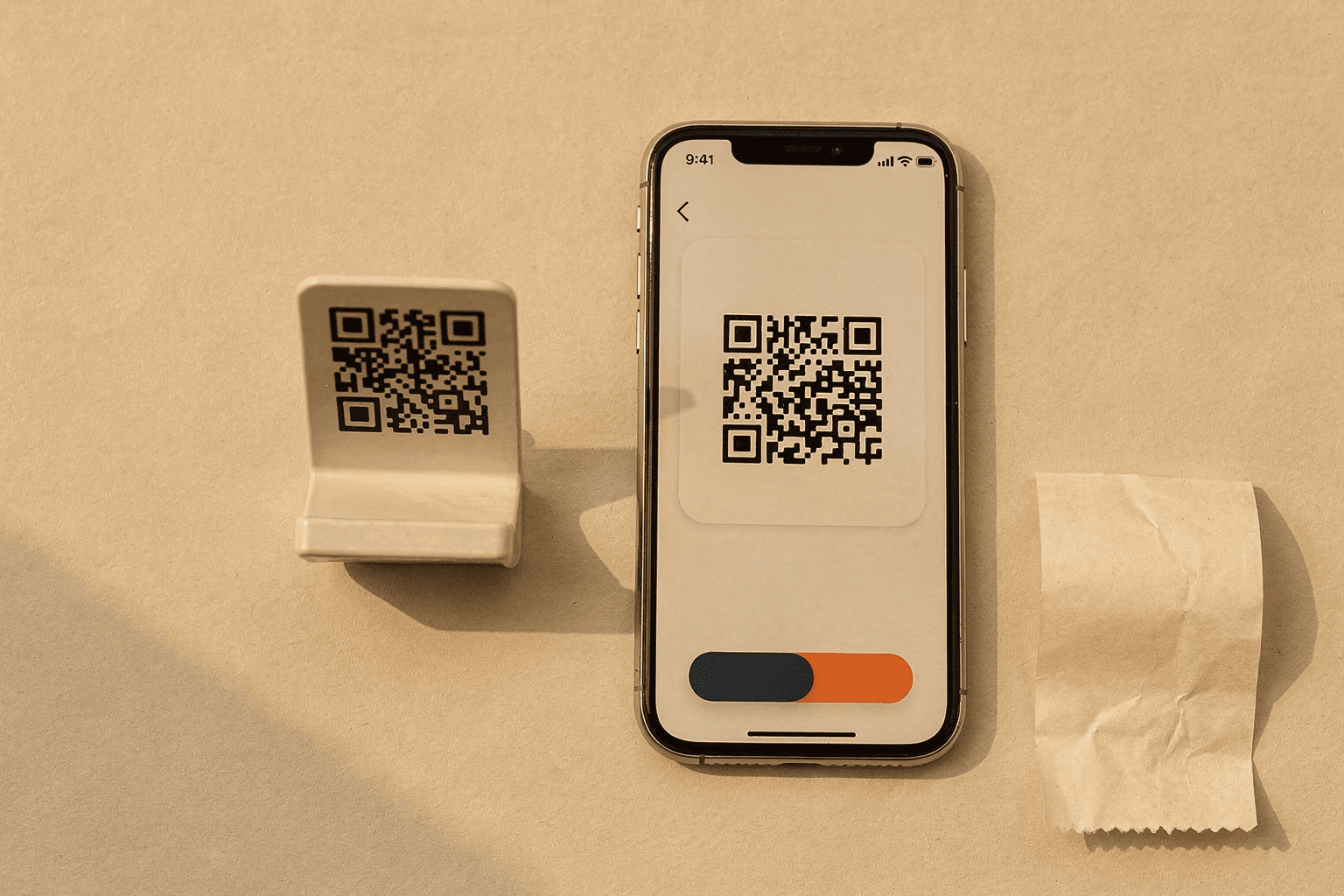
Most Malaysian SMEs do not need a payment gateway to take money online. Malaysians pay by FPX online banking, DuitNow QR and e-wallets far more than by card, and a small business can accept all three through WhatsApp, a QR code or a transfer with zero per-sale fees. Add a hosted gateway only when self-checkout volume makes manual collection painful.
Key takeaways
- Bank Negara Malaysia reported DuitNow QR value more than doubled to RM31.1 billion in 2024, and 64% of e-money flowed through e-wallets, not cards, so a local-rails-first checkout matches how Malaysians actually pay.
- Major banks and approved acquirers still waive the DuitNow QR merchant fee for micro and small businesses, so a low-volume service business can take payment with no per-transaction cost at all (PayNet/BNM, 2023).
- A hosted gateway earns its keep on self-checkout volume, not on a few enquiries a week. The honest test: are you losing sales because collecting payment by hand is too slow?
- On fees, HitPay and Billplz lead on no setup and no monthly cost; Stripe is the easiest global option but supports FPX and GrabPay, not DuitNow QR or local e-wallets; iPay88 and eGHL are now quote-on-request.
- All fees below change often. Confirm the current rate on the provider's own pricing page before you commit.
What payment methods do Malaysians actually use online?
Malaysians pay online mostly by bank rails and e-wallets, not by card. Bank Negara Malaysia reported DuitNow QR transaction value more than doubled to RM31.1 billion in 2024 across 2.6 million acceptance points, and that 64% of e-money transactions flowed through e-wallets, not card-based e-money. FPX, DuitNow QR, Touch n Go, GrabPay and MAE are the methods buyers expect.
"...DuitNow QR usage continuing to increase given its convenience, lower cost and wide coverage." — Bank Negara Malaysia, Annual Report 2024 (reported by Bernama, March 2025)
This matters when you choose how to get paid. A checkout built for cards first, the default of many overseas tools, makes Malaysian buyers hunt for the method they actually use. A checkout that puts FPX and DuitNow QR up front converts better here. Cards still matter for foreign customers and higher-value purchases, but for a typical local SME they are the minority rail.
Do I even need a payment gateway?
Often, no. If you sell services or a handful of items and close most deals by conversation, you can take payment without a hosted gateway: the buyer reads your site, messages you on WhatsApp, then scans a DuitNow QR or transfers by FPX. There is no cart to maintain and no platform cutting a percentage of every sale.
The cost case is strong for low volume. Major banks and approved non-bank acquirers continue to waive the DuitNow QR merchant fee for micro and small businesses, even after the general waiver ended on 1 October 2023, a point PayNet and Bank Negara Malaysia clarified directly. So a small business can accept DuitNow QR at no per-transaction cost, where a gateway would charge a percentage on each sale.
You start needing a gateway when manual collection breaks down: many small orders a day, buyers who want to pay instantly at 11pm without waiting for you to reply, subscriptions or recurring billing, or a real shopping cart with dozens of products. If that is not you yet, a landing page with WhatsApp plus DuitNow QR is cheaper and simpler than any hosted checkout.
How do Malaysian payment gateways compare on fees?
The main options for a Malaysian SME are HitPay, Billplz, Stripe, Razer/Fiuu, eGHL and iPay88. They differ most on three things: setup and monthly cost, the cut per FPX transaction, and the cut per card transaction. The table below summarises published 2026 rates. iPay88 and eGHL no longer publish pricing online, so their cells show historical ranges to confirm directly.
| Gateway | Setup fee | Monthly fee | Per-transaction (FPX / card) | Local methods | Best for |
|---|---|---|---|---|---|
| HitPay | None | None | FPX 1.8% + RM0.40 / card 1.2% + RM1 (DuitNow 1.2%) | FPX, DuitNow QR, TNG, GrabPay, Boost, ShopeePay | Small sellers wanting zero fixed cost |
| Billplz | None (basic) | None (basic) | FPX flat ~RM0.70-RM1.25 / card ~1.5-1.8% | FPX, DuitNow, e-wallets via partners | Donations, invoices, FPX-heavy collection |
| Stripe | None | None | FPX 3% + RM1 / card 3% + RM1 (intl +1%) | FPX, GrabPay only (no DuitNow QR) | Global cards, SaaS, developer setups |
| Razer / Fiuu | ~RM400 + SST | Varies (annual ~RM499 + SST) | FPX 2.4% or RM0.60 / card ~2.4% | FPX, DuitNow QR, six e-wallets, BNPL | Wide local-method coverage |
| eGHL | From ~RM499 (tiered) | Low-volume monthly fee applies | FPX ~1.6-2.4% or RM0.60 / card ~1.4-2.4% | FPX, cards, local e-wallets | Established stores, on quote |
| iPay88 | Quote on request | Quote on request | FPX ~2.7% or RM0.60 / card ~3% + RM1 (historical) | FPX, cards, local e-wallets | Larger merchants, on quote |
Fees, plans and SST treatment change often, and providers run promotions, so treat this as a shortlist guide and confirm the current rate on each provider's own pricing page before you sign. HitPay's no setup, no monthly model and Billplz's flat-fee FPX are the most transparent published rates; the older incumbents (iPay88, eGHL, both now under NTT DATA Payment Services) increasingly quote per merchant.
Does Stripe work in Malaysia (and does it support FPX/local rails)?
Yes, Stripe operates in Malaysia and supports FPX, but its local coverage is narrower than a domestic gateway. Per Stripe's own Malaysia pricing, there is no setup or monthly fee, and both domestic cards and FPX are priced at 3% + RM1 (international cards add 1%). Stripe supports cards, FPX and GrabPay, but not DuitNow QR or most local e-wallets.
That gap is the deciding factor. As Airwallex notes in its Malaysia comparison, "Fiuu has the edge on local payment coverage: it supports DuitNow QR, six Malaysian e-wallets, BNPL, and cash-over-counter payments, none of which Stripe offers." So Stripe is excellent if you sell internationally, run a subscription product, or want the smoothest developer experience, but for a local SME whose buyers reach for DuitNow QR, a domestic gateway (or DuitNow QR direct from your bank) fits the market better.
What does it cost to take a single payment (worked example)?
Take one RM200 sale and the gateway fees diverge sharply by method. On HitPay, an FPX payment costs about 1.8% + RM0.40, so roughly RM4.00, while DuitNow at 1.2% costs about RM2.40. On Stripe, FPX at 3% + RM1 costs RM7.00. On Billplz, a flat FPX fee of around RM0.75 costs RM0.75 regardless of order size, the cheapest for FPX.
The pattern: flat per-transaction FPX (Billplz) wins on larger orders, percentage FPX (HitPay, Stripe) is gentler on tiny orders, and cards almost always cost the most. For a small business taking DuitNow QR straight from a bank, that same RM200 can cost nothing per transaction. So the right choice depends on your average order value and method mix, not a single headline rate. These are published 2026 rates and may change.
How do I add payments to my website?
Add payment in order of friction, not all at once. Start with the free, instant rails Malaysians already use (WhatsApp plus a DuitNow QR), add a self-serve FPX payment link next, and only embed a hosted gateway once self-checkout volume justifies the fees. Most Malaysian SMEs never need the final step for a long time. The four steps:
- Start with the lowest-friction rail. Put a one-tap WhatsApp button and a DuitNow QR (downloadable from your bank app) on the page. For micro and small merchants this is free per transaction and matches how buyers already pay.
- Add an FPX link for self-serve transfers. A payment link from a gateway like HitPay or Billplz lets a buyer pay by online banking without messaging you, useful for after-hours orders.
- Add a hosted checkout only when volume justifies it. When you are processing many self-checkout orders a day, embed a gateway's checkout so cards, FPX and e-wallets all clear in one flow.
- Match the gateway to your buyers. Local-first and e-wallet-heavy points to HitPay, Billplz, Razer/Fiuu or eGHL; international cards and subscriptions point to Stripe.
Whatever you choose, the payment method must be a real, tappable button or QR on a fast, mobile-first page, not a price buried inside a poster image that no phone can act on.
Which option fits which business?
The honest match depends on two things: how much self-checkout volume you handle, and who your buyers are. Low volume and local buyers mean no gateway at all. High volume or international buyers mean a gateway matched to your method mix. Start with what you can run today and let real order volume tell you when to upgrade.
By segment:
- Low-volume service business (consultant, tradesperson, tuition centre, salon): usually no gateway at all. WhatsApp plus DuitNow QR plus FPX transfer covers it at zero per-sale cost.
- Growing local shop with steady self-checkout orders: HitPay or Billplz, for their no fixed cost and FPX strength.
- Selling internationally or running subscriptions: Stripe, despite the higher local fee.
- Larger established store wanting the widest local-method coverage: Razer/Fiuu or eGHL, on a quote.
Where to start
The mistake we see most is bolting a hosted checkout onto a site before the volume justifies it, then paying fixed fees on a trickle of orders. Start lean: a clear page, a WhatsApp button, a DuitNow QR, and an FPX link. Add a gateway when self-checkout demand is real. If you are still deciding between a simple page and a full store, our guide on e-commerce vs a landing page for Malaysian SMEs walks through the trade-off.
Wiz Studio Labs builds and hosts complete Malaysian SME websites with the right payment path wired in for your stage, whether that is a DuitNow QR and WhatsApp on a landing page or a hosted gateway checkout. See our templates or start a brief. RM 399 a year, one edit included, and you pay only if you keep it.
Common questions
Frequently asked questions
- Does my Malaysian small business need a payment gateway on its website?
- Often no. If you sell services or a few items and close most deals by conversation, a buyer can read your page, message you on WhatsApp, then pay by DuitNow QR or FPX transfer with no hosted checkout. Major banks still waive the DuitNow QR fee for micro and small merchants, so this can cost nothing per sale. You add a gateway when self-checkout volume makes manual collection too slow.
- What payment methods do Malaysians actually use online?
- Bank rails and e-wallets dominate, while cards trail. The DuitNow QR network alone moved RM31.1 billion in 2024 (more than double the prior year, per Bank Negara Malaysia), and e-wallets carried 64% of e-money transactions versus card-based e-money. At checkout, expect FPX online banking, DuitNow QR, Touch n Go, GrabPay and MAE.
- Does Stripe support FPX and DuitNow QR in Malaysia?
- Stripe is active in Malaysia, processing cards and FPX online banking plus GrabPay. What it leaves out matters: DuitNow QR is unsupported, and so are wallets such as Touch n Go, Boost and ShopeePay. Stripe's published rate puts cards and FPX at the same 3% + RM1, with no setup or monthly charge. It fits cross-border sales and subscriptions; a homegrown gateway serves a local-rails-first audience better.
- Which Malaysian payment gateway has the lowest fees?
- It depends on method and order size. HitPay and Billplz charge no setup and no monthly fee on their basic tiers; Billplz's flat FPX fee from around RM0.70 is cheapest on larger orders, while HitPay's percentage FPX (1.8% + RM0.40) is gentler on tiny ones. iPay88 and eGHL now quote on request. All rates change often, so confirm on each provider's pricing page before committing.
- Can I take payment in Malaysia without an online checkout?
- Yes. A buyer can read your landing page, message you on WhatsApp, then scan a DuitNow QR or transfer by FPX, with no cart and no platform fee. For micro and small businesses, banks and approved acquirers continue to waive the DuitNow QR merchant fee (PayNet/BNM clarified this in 2023), so low-volume collection can carry no per-transaction cost at all.
- How much does a Malaysian SME website with payments cost?
- A site that takes payment does not need to cost thousands of ringgit. The essentials are a fast mobile page, a WhatsApp button, a DuitNow QR, and an FPX link, with a hosted gateway added only when volume justifies it. Wiz Studio Labs builds and hosts a complete Malaysian SME website for RM 399 a year, one edit included, and you pay only if you keep it.
About the author

Dan Duar
Founder, Wiz Studio Labs · Director, DNE Forwarding
Writes The Wiz Journal on websites, SEO, and digital growth for Malaysian SME owners. Previously a senior data analyst at Grab and a tech consultant at EY. BNI Integrity Shah Alam member.
Like what you read
Get a Wiz site for RM 399/year.
We build it free in 2-3 days. You see it live before you spend a ringgit. Keep it if it works for your business.
No card · No sales call