What a restaurant or cafe website in Malaysia actually needs (and what wastes your money)
Most Malaysian F&B websites bury the three things diners actually want. Here is exactly what a restaurant or cafe site needs (menus, location, reservations, Google) and what is a waste of money.
A restaurant or café website in Malaysia needs four things to win new customers: a readable text-based menu (not a PDF), a precise location with a Google Maps embed, a clear way to reserve or order, and a verified Google Business Profile. Everything beyond those four is optional, and most owners get the basics wrong.
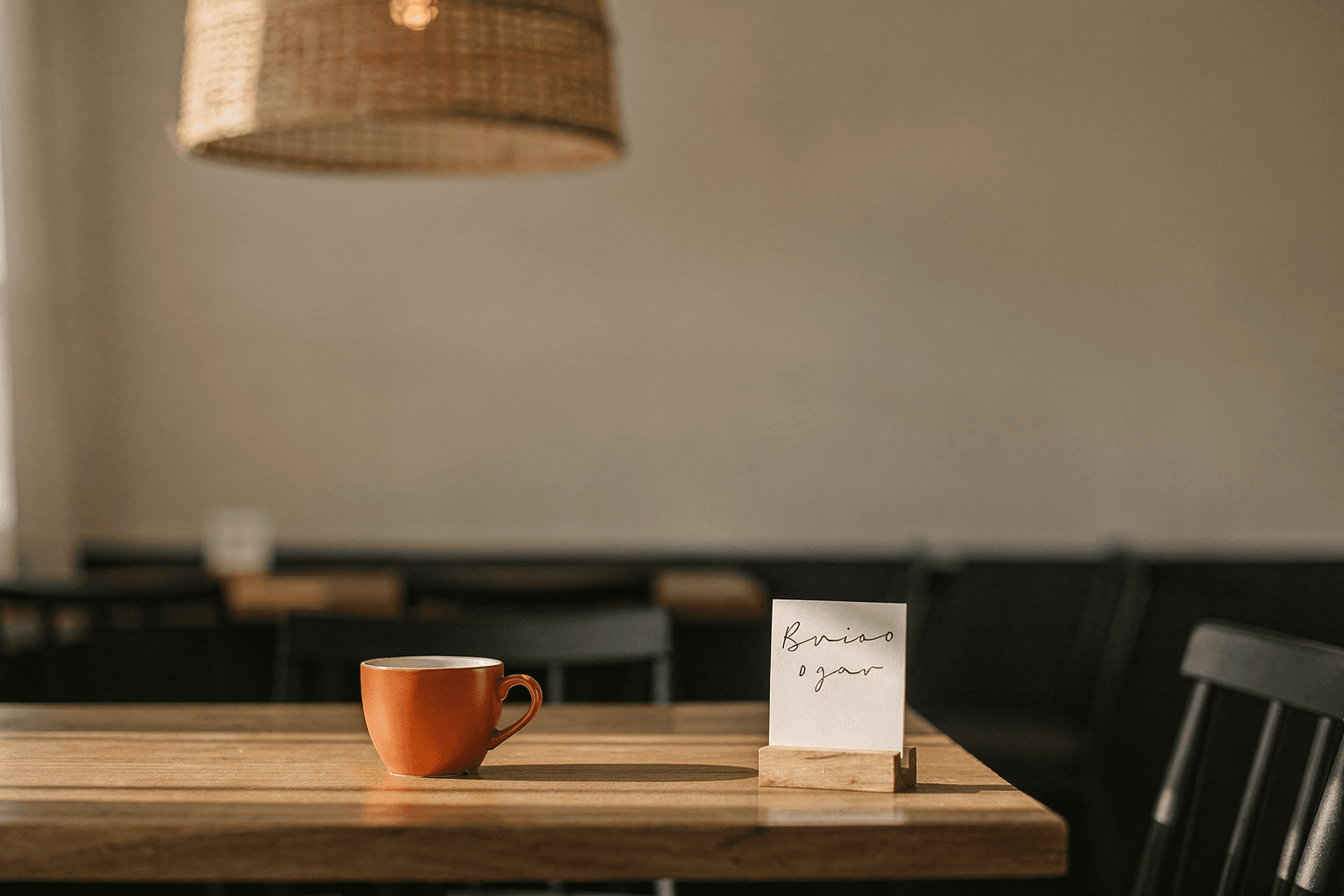
Above: a quiet Malaysian café table in warm light, the kind of clean, uncluttered scene your own website photos should aim for.
Written by Dan Duar, Wiz Studio Labs. Last reviewed: 11 June 2026.
Does a restaurant in Malaysia even need a website if it is already on GrabFood and Instagram?
Yes. GrabFood captures hungry-now orders from decided customers, and Instagram builds awareness, but neither surfaces when a diner Googles "halal café Shah Alam" or "kopitiam near me Klang." Your own page, with your address, menu text, and opening hours in crawlable form, is what Google's local results and AI answers actually read.
Malaysia's Department of Statistics recorded 136,453 food and beverage establishments (census reference year 2022, report published August 2024) in the Economic Census 2023. The vast majority have no dedicated website. That gap is yours to close before a competitor does.
What must a Malaysian café or restaurant website show above the fold?
Above the fold, a diner needs three things within two seconds: what food you serve, where you are, and whether you are open right now. Everything else can wait below. Get those three, plus a single clear action and a halal indicator visible immediately, and most visitors will stay to read the rest.
- Name and food category: "Authentic Hainanese Chicken Rice, Klang since 1982" tells Google and your customer what you are in one line.
- Opening hours: visible on the page, not just on Google Business Profile. Conflicting hours between the two are one of the most common reasons a business loses trust with search engines and customers.
- One clear action: a WhatsApp link, a reservation widget, or a link to your menu. Pick the one that matches how your customers actually contact you.
- Halal status: state your JAKIM certificate number if certified. If pork-free or Muslim-friendly, say so clearly. Ambiguity here costs you customers before they arrive.
What is the single biggest website mistake Malaysian F&B owners make?
Uploading the menu as a PDF is the single most common mistake. Google reads a PDF as an image, not text, so "nasi lemak ayam rendang Petaling Jaya" never becomes a term you can rank for. Toast's restaurant SEO guide names PDF menus as a ranking mistake and recommends a text-based HTML menu instead.
The fix is simple: put your menu as formatted text on a dedicated page, with category names, dish names, and prices. Google indexes every word. If your menu changes daily, a "today's set lunch" note updated regularly beats a stale PDF that was last touched in 2022.
How does Google Business Profile connect to the website, and which comes first?
Google Business Profile (GBP) comes first, always. GBP is what places your restaurant in Google Maps, in the local pack (the three cards above the results), and in AI answer summaries. According to Backlinko's own local-SEO research, 42% of local-search clicks go to the Google Maps Pack, more than any other local result.
Your website then does three things GBP cannot: it hosts your full menu in crawlable text, carries your brand story (photos, the founding year, your team), and reinforces consistent name, address, and phone data across the web. Google's Business Profile guidance tells businesses to post photos and videos of what they offer, and a complete, photo-rich profile gives a hungry searcher more reason to pick you over a bare listing. For the full setup, see our Google Business Profile checklist for Malaysian SMEs.
Set up GBP first, verify it (postcard or video call), then build your website to mirror the same address, phone number, and category. Both should list identical opening hours.
Which contact method should a Malaysian restaurant use: WhatsApp, a booking widget, or delivery apps?
Match the contact method to your format. Kopitiams and hawker stalls need only a WhatsApp link; cafés do well with a pre-filled WhatsApp booking message; full-service restaurants suit a booking widget like Chope, Queueasy, or Google Reserve; takeaway-only kitchens should link straight to GrabFood, Beep, or their own order page.
Five Malaysian F&B formats and their recommended contact method:
| Format | Recommended contact method |
|---|---|
| Kopitiam / hawker stall | WhatsApp message, no reservations needed |
| Café (30 to 80 seats) | WhatsApp link with pre-filled message ("I'd like to book for…") |
| Full-service restaurant | Booking widget (Chope, Queueasy, or Google Reserve) |
| Cloud kitchen / takeaway only | Link directly to GrabFood, Beep, or your own order page |
| Bakery / takeaway café | Order-form link or WhatsApp for pre-orders |
The principle is to make the next step impossible to miss. A WhatsApp button with a wa.me/601XXXXXXXX?text=Hi%2C%20I'd%20like%20to%20book deep link takes under an hour to set up. If you are weighing whether WhatsApp alone is enough, our guide on WhatsApp Business versus a real website covers the trade-offs.
For delivery, weigh the commission. Major delivery platforms charge Malaysian restaurants commissions of up to 30%, according to SoyaCincau's 2021 reporting on F&B operator complaints that prompted operators to seek government intervention. Own-platform solutions like Beep by StoreHub charge lower rates, which means more margin per order stays with the restaurant.
What photos actually bring in customers, and how many do you need?
Four photo types earn their place, and six well-chosen images beat sixty mediocre ones: a hero dish in natural light, an interior or ambience shot, a storefront or entrance, and a founder or staff photo. Real photos build trust; stock images quietly erode it. Quality and relevance matter far more than volume.
- Hero shot of your best dish: natural light, real table setting, no heavy filters.
- Interior or ambience: shows capacity and atmosphere. Critical for diners choosing between a mamak and a café.
- Storefront or entrance: so diners know what to look for when they arrive. Navigation failure kills return visits.
- Founders or staff: a trust signal for long-running family businesses.
Avoid stock photography: a real photo of a small kopitiam beats a Getty image every time. Rename each file descriptively before uploading, so char-kway-teow-penang.jpg works harder in search than IMG_20240803_145322.jpg. Google's Business Profile guidance encourages businesses to post photos of their premises, food, and team, so the same shots that fill your website can populate your Google listing too.
What do Malaysian diners actually check on a restaurant website before visiting?
Menu, location, and opening hours are what diners check first; reviews come fourth and design well below. A survey of more than 1,100 US adults by agency MGH, reported in Restaurant Dive, found 77% check a restaurant's website before visiting. That study is US data, but Malaysian diners describe the same priorities, plus halal status.
A plain but complete website beats a beautiful but incomplete one: a text menu with prices, an embedded Google Map, accurate hours including public holidays and Ramadan variations, and a clear contact option. Those four elements cover what most diners are there to find.
Does a Malaysian restaurant website need Bahasa Malaysia, English, or both?
For most Malaysian F&B businesses, English is enough as the primary language because it covers the widest search audience and is the default index language Google uses for location-based results in Malaysia. Two situations justify an extra language layer: a predominantly Chinese-speaking customer base, and a heavy reliance on local Bahasa Malaysia search.
If your restaurant serves a predominantly Chinese-speaking community (Klang, Ipoh, Penang's Georgetown, certain areas of KL), add basic Mandarin text for dish names and contact information.
For Bahasa Malaysia, the most efficient approach is to write the main page in English and add Bahasa Malaysia copy to your Google Business Profile description and posts. "Terdekat" (nearest) searches in Malaysia have grown over time according to Google Trends data for Malaysia, making local-language signals in your GBP listing increasingly valuable for capturing that traffic, without requiring a separate translated site.
What is actually a waste of money on a Malaysian restaurant website?
Five features reliably waste money for an independent Malaysian restaurant or café, and you should skip them until the four essentials are solid: autoplay music or splash screens, a custom mobile app, bespoke booking software, live Instagram feed embeds, and day-one loyalty-points software. Each adds cost and load time without adding diners.
- Animated splash screens or music on load: autoplay audio causes immediate exits on mobile data, and heavy animations slow page load on 4G connections.
- A custom mobile app: a mobile-optimised website does the same job at a fraction of the build and maintenance cost.
- Custom booking software: Chope and Queueasy already integrate with Google Reserve. Building a bespoke system is not justified for most independent F&B operators.
- Live Instagram feed embeds: these create external dependencies that slow your page load time and break when the API changes. Link to your Instagram profile instead.
- Day-one loyalty points software: useful eventually, but it is a Phase 2 problem.
Malaysia's online food delivery market generated USD 2.7 billion in revenue in 2023 and is projected to grow at a CAGR of 9.5% from 2024 through 2032, according to market research firm Acumen Research and Consulting. A big market does not mean every feature it implies is worth building on day one. A small café's website has one job: turn a curious Google searcher into a diner who walks through the door.
How do you get a restaurant website in Malaysia without overspending?
A working restaurant website for a Malaysian café or kopitiam does not need to cost thousands of ringgit. A domain, hosting, a text menu page, an About page, and a contact page with a Maps embed and correct schema markup so Google can read your hours and cuisine: that is all you need to start capturing local search traffic.
Wiz Studio Labs builds and hosts complete business websites for Malaysian SMEs at RM 399/year, with one edit included and no setup fee. Pay only if you keep it. If you want to sanity-check that price first, see what a small-business website should cost in Malaysia. When you are ready, start your site or contact us to describe your F&B business.
Sources
- Department of Statistics Malaysia (DOSM): Economic Census 2023: Food and Beverage Services Sector (reference year 2022, published August 2024)
- Backlinko: Local SEO Statistics
- Google Business Profile Help: Add photos to your Business Profile
- Restaurant Dive: 77% of diners visit restaurant websites before going (MGH survey of 1,100+ US adults)
- Toast POS: The Complete Guide to Restaurant SEO
- SoyaCincau: F&B operators seek government intervention on delivery platform commissions (2021)
- StoreHub: Beep Food Delivery for F&B
- Google Trends: "terdekat" in Malaysia
- Acumen Research and Consulting: Malaysia Online Food Delivery Market
Related: WhatsApp Business vs a real website · The Google Business Profile checklist for Malaysian SMEs
Common questions
Frequently asked questions
- Does a restaurant in Malaysia need a website if it is already on GrabFood?
- Yes. GrabFood captures hungry-now orders but does not help you rank on Google when diners search for your cuisine or location. A website with a text menu, verified address, and Google Business Profile link is what surfaces in local search results. Malaysia had 136,453 registered F&B establishments in 2022 (DOSM), most without a website. That is the gap a website closes.
- What should a Malaysian restaurant website include at minimum?
- Four things are non-negotiable: a text-based menu (not a PDF), your precise address with a Google Maps embed, your opening hours (matching your Google Business Profile exactly), and a single clear contact action such as a WhatsApp booking link. Halal certification status or pork-free notice should also appear prominently to avoid losing Muslim diners before they visit.
- How much does GrabFood charge Malaysian restaurants per order?
- Major delivery platforms charge Malaysian restaurants up to 30% commission per order, according to SoyaCincau reporting on 2021 F&B operator complaints that drew government attention. Own-platform solutions like Beep by StoreHub charge lower rates, meaning more margin stays with the restaurant on each order.
- Why is a PDF menu bad for a Malaysian restaurant website?
- A PDF menu is invisible to Google. Search engines read it as an image file and cannot index dish names or prices as searchable text. This means a diner searching for a specific dish near them will never find your restaurant through it. A plain text menu page lets Google index every dish name, cuisine type, and price, turning each item into a potential search match.
- How much does a restaurant website cost in Malaysia?
- A working restaurant website in Malaysia does not need to cost thousands of ringgit. The essentials are a domain, hosting, a text menu page, an About page, a contact page with a Maps embed, and correct schema markup. Wiz Studio Labs builds and hosts complete business websites for Malaysian SMEs at RM 399 per year, one edit included, pay only if you keep it.
- Should a Malaysian restaurant use Chope, Queueasy, or a custom booking system?
- For most independent restaurants in Malaysia, Chope or Queueasy is the right choice because both integrate directly with Google Reserve, putting your reservation link inside Google search results. A custom booking system is rarely justified for a single-location F&B operator. Kopitiams and hawker stalls rarely need any reservation system at all, a WhatsApp link with a pre-filled message handles bookings without any software cost.
About the author

Dan Duar
Founder, Wiz Studio Labs · Director, DNE Forwarding
Writes The Wiz Journal on websites, SEO, and digital growth for Malaysian SME owners. Previously a senior data analyst at Grab and a tech consultant at EY. BNI Integrity Shah Alam member.
Like what you read
Get a Wiz site for RM 399/year.
We build it free in 2-3 days. You see it live before you spend a ringgit. Keep it if it works for your business.
No card · No sales call